Tampilkan postingan dengan label Ferrari. Tampilkan semua postingan

Jumat, 28 Mei 2010

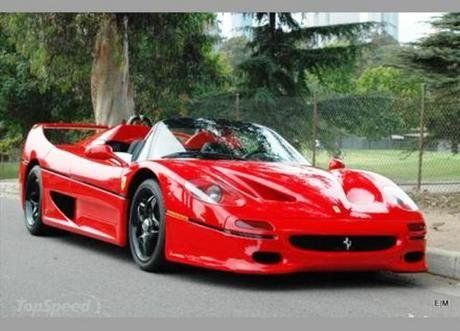
Ferrari F50 (1995)


The Ferrari F50 was a mid-engined range-topping sports car made by Ferrari. The F50 was introduced in 1995, as a successor to the F40, to celebrate the company's 50th anniversary. The car is a two door, two seat convertible with a removable hardtop. It has a 4.7 L naturally-aspirated 60-valve V12 engine that was developed from the 3.5 L V12 used in the 1992 Ferrari F 92 A Formula One car.

Only 349 cars were made, one fewer than Ferrari estimated they could sell. This was, in the words of Ferrari spokesman Antonio Ghini, because "Ferraris are something cultural, a monument. They must be hard to find, so we will produce one less car than the market." The last Ferrari F50 was produced in Maranello, Italy in July 1997.

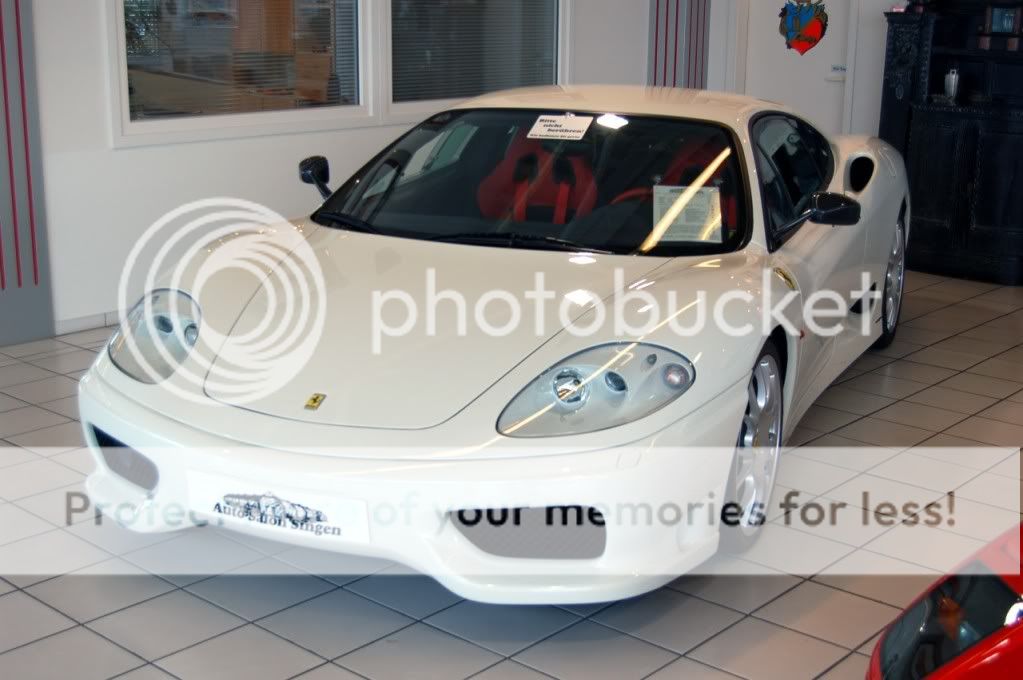
Ferrari 360 Modena Challenge


The Ferrari 360 Modena Challenge was unveiled on July 4th, 1999 by Michael Schumacher at the Nürburgring Circuit. The Challenge version of the Ferrari 360 Modena has been created to give those Ferrari customers who like to take to the race track a strong racing and performance package. In 2000, the Ferrari Challenge Pirelli Trophy, a championship fought out around the world and which dates back to 1993, has seen the Ferrari F355 joined by the 360, the two cars compete in different classes.

The Ferrari 360 Modena Challenge went into production at Maranello at the end of 1999 and the first production run included a limited number of cars exclusively for drivers registered for the Challenge.

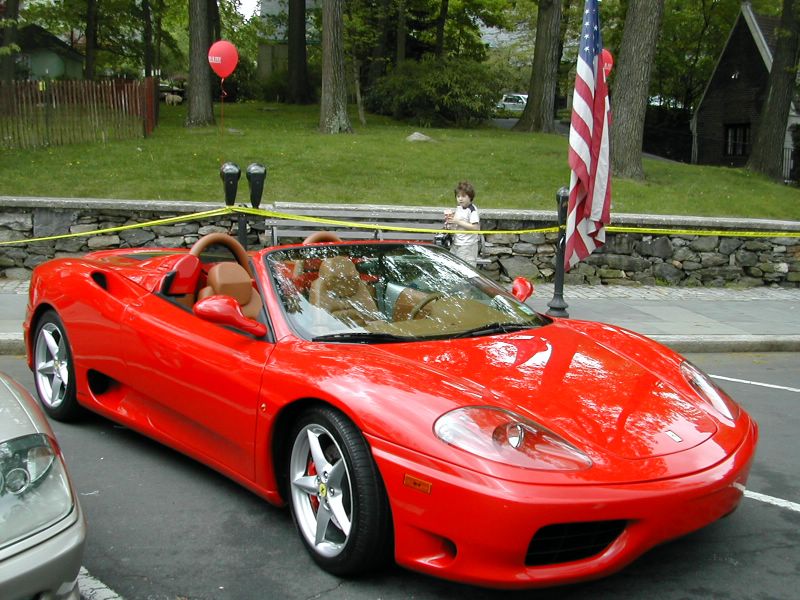
Ferrari 360 Spider


The Ferrari 360 Spider is Ferrari's 20th road going convertible. In terms of engineering, looks, and performance it is the best production spider Maranello has ever produced. Thanks to the exclusive know-how Ferrari has accumulated as a Formula 1 constructor, it is the most technologically advanced convertible available.

Despite the car's mid-mounted 400bhp V8 engine, Ferrari engineers found a way of creating a roof that automatically folds into its own well between the cabin and the engine bay, thus ensuring purity of line. The intrinsic quality of the design is underlined by the two fairings in the bodywork to the rear of the seats which evoke memories of classic Ferraris. These are matched by the two roll hoops that provide maximum safety for both of the car's occupants. With the top up the car is aggressive, emphasizing the V8 visible through engine cover. Lowering the fully automatic roof transforms the Ferrari 360 Spider, highlighting its connection to great sports racers. As strong and rigid as the Berlinetta, the Ferrari 360 Spider offers performance almost identical to the coupe version, achieving a top speed over 180mph while weighing barely 130lbs more and offering the same amount of room for the occupants and their luggage.

Ferrari 550 Barchetta Pininfarina


All Ferraris are limited edition pieces, some more so than others. With only 448 produced, the Ferrari 550 Barchetta Pininfarina is a very special car indeed. It is a salute to the 70th anniversary of the house that has styled more Ferraris than any other, the 50th anniversary of the two company's first joint endeavor, and a celebration of the Scuderia Ferrari's 2000 and 2001 World Championships for Formula 1 Constructors. With a shape and a name that harkens to the sports racers and legendary sports spiders of the 1960s, and all the technology of a modern Ferrari GT car, the Ferrari 550 Barchetta Pininfarina is perhaps the ultimate expression of a sun-lover's Italian automobile.

Ferrari 456M GT Scaglietti


At the 2002 Geneva Motor Show, Ferrari introduced a special two-tone version of the Ferrari 456M GT as a further example of the personalisation opportunities offered by the Carrozzeria Scaglietti personalisation programme, presently adopted by 90% of Ferrari's clientele

In the case of the Ferrari 456M GT Scaglietti displayed on the Ferrari stand, and expressly designed for Michael Schumacher, the dominant characteristic is the two-tone paint finish. This elegant 'tone on tone' personalised colour mix was obtained through a specific study ' personally commissioned by Schumacher - on the chromatic tones of grey, then also applied to other exterior details as the wheel rims and the radiator grille.

Ferrari Enzo (2002)


Ferrari regularly produces a model that represents a synthesis of its technological knowledge and its sporting experience. The Ferrari 250 LM was the first of this type of models in 1963. It was conceived by the founder especially for the owner-driver and was deliberately designed for racing. The Ferrari GTO (1984), the Ferrari F40 (1987) and for Ferrari's fiftieth anniversary the Ferrari F50 (1995) have been the significant milestones in this journey. Each of these limited edition cars had a specific technological message that enriched the performance of the model. In 2002 Luca di Montezemolo presented the Ferrari Enzo which married four consecutive years of supremacy in the Constructor's World Championship to the technical input and fine adjustment sensitivity of the World Champion Michael Schumacher.

Ferrari 575GTC (2003)


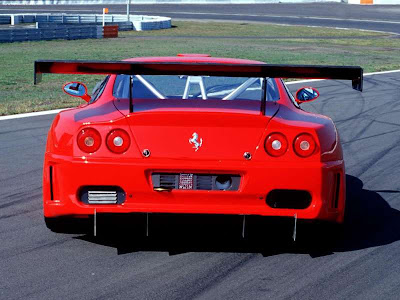
The Ferrari 575 GTC has not wasted any time, winning first time out in the FIA GT series. The car is based on the road-going Ferrari 575M Maranello, developed by the Ferrari Corse Clienti department in collaboration with N-Technology and has won the penultimate round on the 2003 calendar at Estoril in Portugal. The JMB Racing-Pirelli crew of Fabio Babini and Philipp Peter crossed the line ahead of the BMS-Scuderia Italia Ferrari 550 Maranello of Cappellari/Gollin and the similar car of Biagi/Bobbi.

Thanks to their third place finish, Thomas Biagi and Matteo Bobbi have now won the drivers' championship with one race in hand, while the BMS-Scuderia Italia has taken the team award ahead of schedule.

"I am particularly happy with this debut win for the Ferrari 575 GTC and my congratulations also go to Biagi, Bobbi and all the BMS-Scuderia Italia crew for taking the titles," commented Jean Todt, the Managing Director of the Ferrari Gestione Sportiva.

Ferrari 575GTC


The Ferrari 575M Maranello is a two seat, three door, grand tourer sports car built by Ferrari. Launched in 2002, it is essentially an updated Ferrari 550 featuring minor styling changes from Pininfarina. The 575M was replaced by the 599 GTB in the first semester of 2006.

Updates from the 550 include a renewed interior, but with substantial improvements inside, including bigger brake discs, a larger and more powerful engine, a different weight distribution, refined aerodynamics and fluid-dynamics and an adaptive suspension set-up (the four independent suspensions are also controlled by the gearbox, to minimize pitch throughout the 200-milliseconds shift time). Two six-speed transmissions are available, a conventional manual gearbox and, for the first time on a Ferrari V12, Magneti Marelli's semi-automatic (sequential) 'F1' gearbox. The model number refers to the engine's capacity in litres, whilst the 'M' is an abbreviation of 'modificato' or 'modified'.

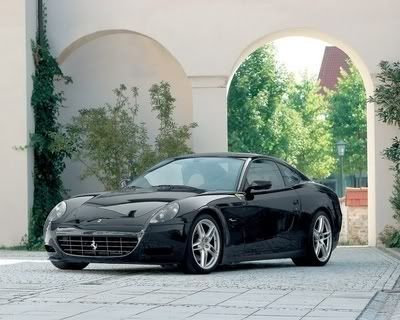
Ferrari 612 Scaglietti


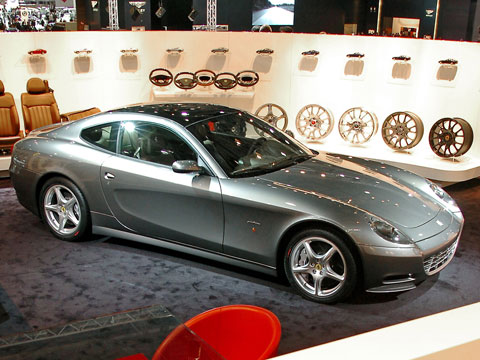
The Ferrari 612 Scaglietti is the perfect marriage of sporty thoroughbred Ferrari berlinetta performance and excellent onboard comfort for four occupants. The replacement for the highly successful Ferrari 456M, the new model's own winning combination derives from a roomy interior enhanced by significantly larger dimensions, a 60 kg reduction in weight, and a range of uncompromising design solutions.

All-aluminium space frame chassis and bodywork construction used for the very first time on a Ferrari 12-cylinder and built entirely by Ferrari at the Scaglietti light-alloy technologies facility. The result is a massive 60% increase in overall structural rigidity (rigidity-weight ratio). The Ferrari 612 Scaglietti's advanced aluminium construction also translates into improved comfort and handling, in addition to offering maximum occupant protection in the case of a collision.

Ferrari 575M Superamerica


The Pininfarina-designed Ferrari 575M Superamerica combines Ferrari 12-cylinder berlinetta performance with a highly original, innovative take on the convertible concept.

The Ferrari 575M Superamerica is the first production car to adopt an innovative rotating roof movement in combination with electrochromic technology developed exclusively for glass surfaces of these dimensions, with Saint Gobain.

The Fioravanti-patented rotating roof concept allows the Ferrari 575M Superamerica driver to electrically drop the top in 10 seconds flat, making it the world's fastest convertible berlinetta (320 km/h top speed).

Derived from the Ferrari 575M Maranello, the Superamerica is available with either an F1-style or manual gearbox. Its big 12-cylinder engine has been boosted to deliver 540 hp too. The new car can also be fitted with the GTC Handling package which offers Ferrari's very latest high-tech features including carbon ceramic brakes.

The Ferrari 575M Superamerica's unusual electric roof has been dubbed Revocromico to highlight the unique combination of its rearward rotation movement and electrochromic technology. It has a carbon-fibre structure and the boot capacity remains unchanged whether the roof is open or closed too. The glass rear window also acts as a highly effective wind deflector when the roof is open.

The use of electrochromic glass means that the driver can completely control the level of light entering the cockpit. There are five tint levels available and the glass can go from dark to light in under a minute, at the touch of a button.

Ferrari 575 GTC Evoluzione


The opening Ferrari Challenge Trofeo Pirelli 2005 race took place on 2nd and 3rd April at the Enzo and Dino Ferrari autodrome, Imola. The Italian GT championship kicked off that weekend with the Ferrari 575 GTC Evoluzione 2005 and the Ferrari 550 Maranello appearing in the main class and the Ferrari 360 GTC in the N-GT category.

It was the debut race for the modified Ferrari 575 GTC Evoluzione. The Ferrari Corse Clienti department has made changes to the original version with the collaboration of the technical GT head, Maurizio Nardon. The aerodynamics were completely revised with the addition of a new splitter and air intake on the modified bonnet. These changes improve internal air flow. The engine has been totally redesigned and, together with the new cooling tank, results in greater power and better handling. The current torque curve guarantees improved power management and the work on the steering column means that the new car is easier to point into curves and performs more smoothly when in them.

Ferrari Design Competition


Ferrari F2005


The Ferrari F2005 is the fifty first single-seater built by Ferrari specifically to compete in the Formula 1 World Championship. The design, which bears the internal code number 656, represents Ferrari's more exhaustive interpretation of the 2005 technical regulations. The main elements, relating to aerodynamics are more advanced than on the F2004 M.

The chassis is lighter, despite the need to strengthen the lateral anti-intrusion panels within the monocoque to increase its ability to meet the requirements of the crash-test, which is stricter than in the past. The shape has been revised, with modifications to the opening of the side pods and the area around the turning vanes. The side pods have been adapted to accommodate the new cooling system.